
Eight sources, one formula. The value of the whole.
Behind the PhytoHeal phytocomplex is a formulation project: different sources, selected to become part of the same platform.
Updated 18 October 2026
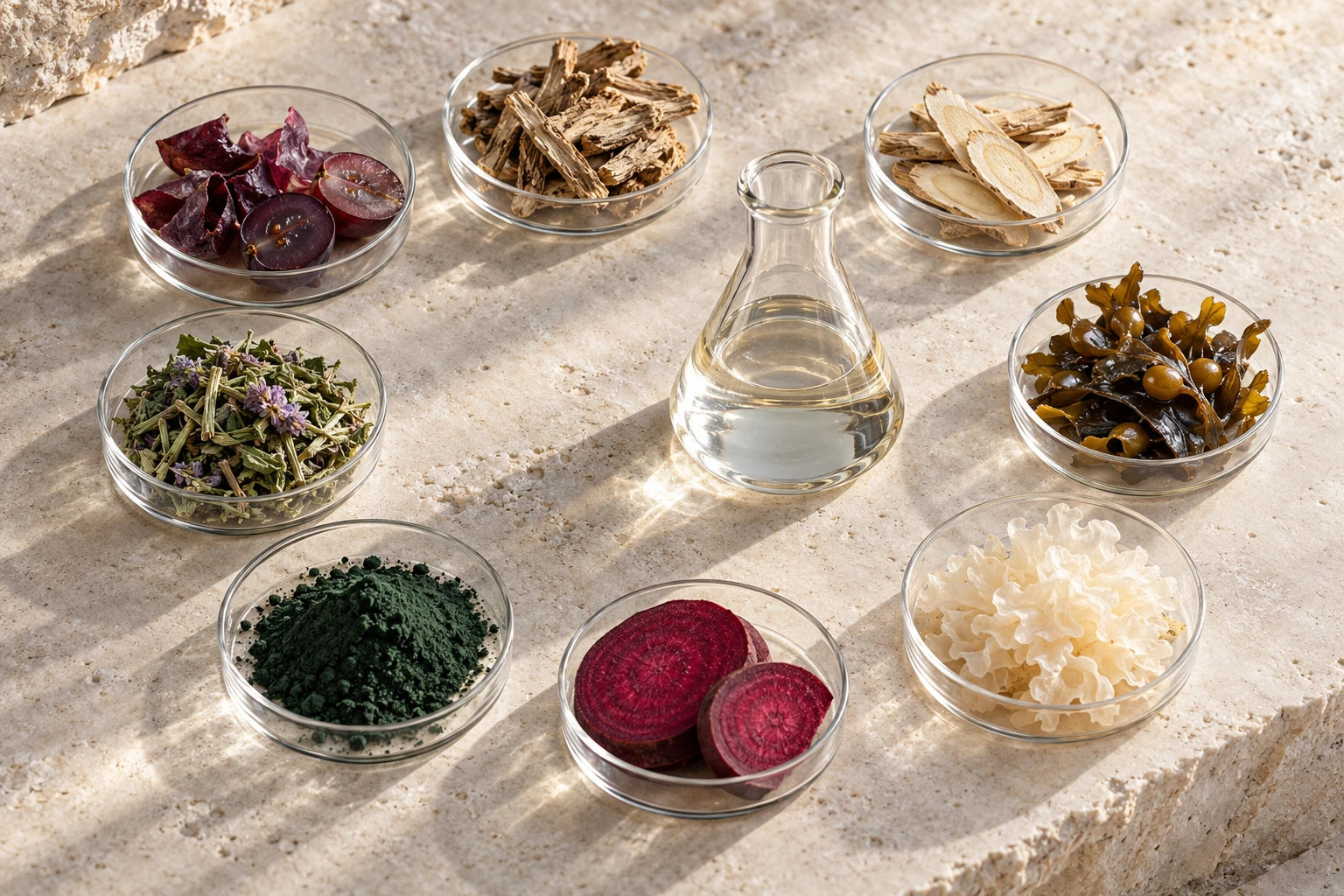
A platform that goes beyond botanicals
Vine, Japanese knotweed, astragalus, alfalfa, bladderwrack, spirulina, beetroot and tremella are the eight sources described for the PhytoHeal platform. They do not all come from the same world. Alongside botanical sources are a marine source, a biomass commonly known as spirulina and a fungal source. That diversity is a useful starting point for understanding the project.
A source is more than a name
A botanical extract is not the same as a single molecule. Its identity also depends on the starting material and preparation. Our ingredient library therefore distinguishes the source, the substances described in the literature and their cosmetic context. Saying “vine” does not mean grape-seed oil; mentioning beetroot does not automatically transfer every property of an isolated substance to the formula.
Formulating means making choices
The phytocomplex is presented as a proprietary composition, rather than a home recipe of eight ingredients mixed in equal parts. The eight sources describe the architecture of the platform; they do not specify percentages, concentrations or a complete INCI list. To understand what is in the serum you choose, refer to that particular product’s composition.
The same base, four interpretations
Regenerative Tissue Serum highlights colloidal silver and silicon. Derma Cure Serum pairs colloidal silver with hyaluronic acid. Anti-Inflammatory Serum highlights vitamin D and colloidal silver. BurSore Serum features zinc and colloidal silver. Sharing a starting point does not make the four products interchangeable: each has its own composition and cosmetic focus to understand.
Where to start
Start with the need you want to address in your routine, then explore the composition of the corresponding serum. The formula page explains the shared project; the library explores the eight sources individually; the comparison places the differences side by side. These are three complementary ways to understand the same approach, at the level of detail you need.
Sources and further reading
Keep exploring.

An ingredient is not a formula.
A familiar name can catch your attention. Choosing thoughtfully means looking at the product as a whole.
Read the article
The skin barrier, clearly explained.
A phrase you hear often. A starting point for understanding skin comfort without turning it into a slogan.
Read the article
After the sun, time for comfort.
Your time outdoors ends. Attention to your skin can continue, with a clear role and realistic expectations.
Read the article